In today’s episode, we’re unpacking an important yet often misunderstood component of effective publication planning: the Publication Steering Committee (PSC).
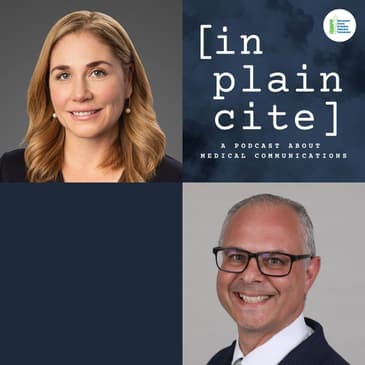
We’re joined by industry leaders Cindy Toste, Senior Director of Publications at GlaxoSmithKline, and Paul Ricigliano, Senior Director and Head of Oncology Global Publications at Daiichi Sankyo, Inc.
Together, we explore what makes a PSC truly successful, from establishing clear governance and managing cross-functional dynamics to defining roles across medical affairs and clinical teams. Cindy and Paul also share real-world lessons on how to navigate disagreement, maintain momentum, and ensure decisions don’t stall progress.
Whether you're forming your first PSC or optimizing an existing one, this episode offers practical guidance on turning conflict into collaboration, and collaboration into meaningful publication outcomes.
To join ISMPP, visit our website at https://www.ismpp.org/
This episode is generously sponsored by Avalere Health.
Downloadable transcript here
Rob: When you're dealing with large clinical trials, making sure that data is communicated effectively, in the right format and to the right audience requires planning and coordination, often over the course of years. That's where publication steering committees come in. These formal groups bring together investigators, authors, and company leaders to chart the course for abstracts, manuscripts, and congress presentations. But how do they actually work? Who should be on them and what are the pitfalls to avoid?
This is In Plain Cite, a podcast exploring the biggest questions and trends facing medical publication and communication professionals. I'm your host, Rob Matheis, President and CEO of ISMPP.
Today's episode is generously sponsored by Avalere Health.
On today's episode, I'm joined by Cindy Toste, Senior Director of Oncology Publications at GlaxoSmithKline Consumer Healthcare, and Paul Ricigliano, Senior Director and Head of Oncology Global Publications at Daiichi Sankyo, Inc. Together we'll dig into how steering committees are set up, what role publication professionals play, and why planning and expectation setting upfront can make all the difference.
Paul: Basically, we want to ensure that the publications follow good publication practices and ethical guidelines. It's a way for this committee to align on the data and the communication points across multiple abstracts, posters, presentations, and manuscripts. And it's a way for the committee to help prioritize topics and coordinate timelines.
There's a lot of discussions, a lot of data, and a lot of information that has to get out, out into the public. The PSC can also help with authoring and planning. As a reminder to everyone, being on a steering committee does not guarantee authorship and the PSC must follow authorship guidelines. And an example for this would be, you know what, we often have large trials that have dozens of planned publications that take place over years. Without a publication steering committee, it can be unorganized, where the PSC can help with the steady flow of data and ensure there's no duplication of publication.
Rob: So that makes a lot of sense. But let me, um, let me touch base on something there that you had mentioned earlier, Paul, around authorship. Wouldn't it seem natural that someone who's sitting on one of these committees and they're putting all this time and effort into it and they're participating in the study, wouldn't they just naturally assume that they're gonna be an author, or why wouldn't they be?
Paul: So they could assume, and it happens all, all the time that people assume that, but we have authorship guidelines. It's based on many different factors and those discussions take place. We look at things like enrollment, participation in study design, participation in data analysis, interpretation of data. So we make sure we have a steady, everyone follows the same guidelines. So we use those guidelines to pick and choose the authors. And just jumping into a steering committee discussion does not mean you're gonna get on every paper.
Rob: Do the members of the steering committee know about all these rules or do they understand that process?
Cindy: Yes. I think that' one of the most important things is setting up a charter at the beginning of a publication steering committee that's gonna outline when they're meeting and other details, including authorships so people have an awareness of how that's gonna happen and how decisions are made on the publication steering committee.
Rob: Who writes that charter?
Cindy: So that charter will be put together by the sponsor and by the co-chair that gets selected. And so that's drafted together and then developed, um, and then shared with the publication steering committee. But oftentimes companies have templates of starting points so that there's guidance and scope already there.
Rob: It's really helpful because we have listeners that are in small companies that don't have templates for anything, and they have one publication person doing everything and sweeping the floors at night. Um, and then of course some of our listeners are from big companies and they know exactly what you're talking about and where to pull these types of documents out.
I guess what I'm wondering next is how do you pick the right people for the steering committee? Like, who's on it? How big are these committees and how do you go about that?
Cindy: Sure. So, um, really, people that compromise a PSC are principal investigators and other key academic authors, also people from the sponsor, so like folks on your medical affairs team, clinical leads, pub managers. Sometimes you pull in statisticians or medical writers or other team members if needed.
Rob: Got it. Does commercial ever work on these committees?
Cindy: No.
Rob: Paul, same answer.
Cindy: Same answer, no.
Rob: Okay, just making sure. Okay, so it's strictly medical, it's the authors, it's definitely a more of a medical affairs activity, or is it more of a clinical activity or both? Where do you classify these things as sitting?
Paul: There should be representation from both. It should be medical affairs driven, but clinical obviously is involved because the studies are usually driven by clinical.
Rob: Got it, got it. All right, so our listeners, they're, you know, range from traditional publication professionals to medical communication professionals, and it sounds like they're pretty important when it comes to these committees. I just wanted to get a better sense for our listeners as to what their role is and what they're doing.
Paul: So the publication person should really be involved in establishing and running the committee. The first step should be assess the need. Is there a need for a publication steering committee? Is the program big enough? Does the team want to conduct one? And if the answer is yes, the publication lead should work with the team to draft a charter, including objectives, membership, term limits, and decision making rules. And once you have the charter in place, the pub ead would then work with your team members to select members. So you would vet for expertise, availability, diversity. If it's a global study, you want representation from around the world, not just from one region. And then once you do that, the pubs person then would work with the team to onboard and train. So cover things like conflict of interest, disclosures, publication ethics, confidentiality, and of course your internal authorship guidelines that you would upfront discuss with the authors.
Cindy: To add to that, if a publication steering committee is set up, their role is really then to coordinate and organize the PSC meetings. It's really to prepare meeting timetables and agendas and documents. Um, they're gonna be responsible for preparing meeting minutes and being the, the point of contact for all the external folks.
Rob: Interesting. That was actually my next question is, you know, what role does the publication professional play in terms of some of those operational components? It sounds like they're pretty much in charge of these meetings. Would you say that's accurate, Cindy?
Cindy: Yeah, absolutely.
Rob: Great, great. Turning a little bit to a different part of considering these steering committees. If someone is considering putting 'em together, I know there's a lot of things that they have to take into account considering how much data is available and whether or not an organization actually wants to have them.
For someone who might be considering having a steering committee for a particular set of data, would you say that it helps with credibility ultimately, or does it just slow things down? What's your, your thoughts on that?
Cindy: Actually, it could be either. So there's cases where it absolutely helps with credibility, um, because things are very well vetted. But sometimes because you do have a bigger group with a lot of different viewpoints, it can slow the process down. And I think that's why having a sort of limited number of folks on that PSC and having a very clear charter related to decision making are really key.
Paul: You know, with the pros, you can really build a comprehensive publication plan. You can align your data across multiple publications. You could gain a consensus. But obviously with the cons, sometimes the meetings and the process take time. Decisions can be slowed. Sometimes too much structure can stifle quick and innovative ideas. And sometimes the steering committee may ask for multiple statistical analyses that may not be possible, or the team may not have the biostats support to conduct all those analyses.
Rob: Yeah, and I can imagine that being the case, particularly because you've got external authors who maybe don't know what resources are available. You've got a company with finite resources and a different perspective. I guess I was gonna ask you if these things always go swimmingly or if there's ever issues? Can either of you tell me about whether or not there's disagreements ever within these committees?
Cindy: For sure. Common areas of disagreement, I think, when working on these publication steering committees, sometimes authorship order comes up. And also, issues around which data to present first is another sort of topic that comes up. I think, again, going back to best practices, it's really referring back to your charter and being able to reference that decision making process. You know, are we gonna do a consensus or a vote is really important. And then I think when you have authorship concerns, right? It's really going back to GPP and ICMJE criteria and your charter to really drive those conversations forward.
Rob: That makes good sense. You know, it's been my experience that a lot of times some of the external authors, if they come from academia or if they're principal investigators, they don't really understand the process so much. And even though you're using terms like GPP and charter and things like that, it doesn't always resonate so well. Has that been the experience for you guys in terms of your work on PSCs?
Cindy: Yes, I think that's why it's such an important step when you're first bringing on the folks onto the PSC that you, um, don't skip the onboarding step. So I think that there's a lot of training that needs to be done to level set to make people familiar with the different processes. And if you're using a publications tool, that's important. And also, uh, just reminding people or letting them know about GPP and ICMJE.
Rob: It sounds like there can be a lot of points of disagreement, so although these are really useful committees, the potential for there to be differences of opinion is probably a lot. What's the toughest disagreement that you find? Is it authorship or something else?
Cindy: I think on my end it is. It's around authorship and then also like data. I think sometimes there's competing ideas about what should come first and where it should be published.
Rob: Is there a way that either of you might recommend that these types of things get resolved? I suppose going back to the guidelines is the best thing, but if a food fight breaks out over author ordership, what does one do in that situation?
Paul: I think it's good to have a strong chair of the meeting who can make decisions and help guide the team on those decisions.
Rob: Yeah, and that's, that's the publication professional, or that's…
Paul: No, ideally what you would wanna do is have one of your investigators as the chair and have that established up front, so someone who can referee the pub plan, ref, referee the authorship order obviously, and support the pub lead.
Rob: So I'm thinking about these, uh, these committees and because they're so complex and they have so many people, and there's a lot that goes into it, from a budget perspective, are they cost effective? What does something like this cost or how do we con consider these questions?
Paul: Yeah, so the cost can range, and it just depends on if you have face-to-face meetings, how often do you meet, where are the members coming from? So if you have a global committee and you have people from around the world and you're traveling to a location and you're doing it two or three times a year, there can be budget implications. Obviously, if you have virtual meetings using Zoom or Teams, you could keep the costs down.
Cindy: You know, a lot of times we try to have the meetings at a bigger congress where people are already attending to save some costs.
Rob: You're always anticipating my question, Cindy, so I was just about to ask what the best practices are. So it sounds like trying to align them with other things already happening is definitely a way to save.
So not all of our listeners and the companies they work for are gonna have the budget for these types of things, certainly not the live meetings. And particularly I'm thinking about our biotechs and the small organizations that are really just trying to keep the lights on. If they were contemplating a uh, PSC, is there a best practice they should use or is there something that should not be cut out if they had to cut something? What's best practices there?
Cindy: I, I, that's an interesting question. I guess the key thing is I think the core is not having a very large group, best practices, not having too many people there. It's definitely having that charter. It's definitely having some systems in place or mechanisms for tracking publications. And also, definitely not skipping on the training part. So that onboarding that we had mentioned earlier in terms of best practices for the PSC is really important.
Rob: Yeah, I've heard that come up quite a bit now is this onboarding and this setup for the meetings. And I really wanna call that out for our listeners because it's come up a number of times that whether there's problems with the meetings or when things don't go well, it really seems like it, it's an artifact of not having the proper setup and making sure everybody's on the same page at the very start.
Paul: Yeah, if everyone's on the same page upfront, everyone understands the charter, they understand the purpose of the meeting, what it is and what it is not, and you outline things like your authorship guidelines and why you're having this meeting, what your goals and objectives are. If there's issues, as you have meetings, you can go back to the charter, you could go back to the information that you discussed upfront to keep everyone on the, you know, on the correct path moving forward.
Rob: Yeah, both of you at various points in this discussion have mentioned publication software a little bit. And when I think about that and cost and all that, how necessary is having publication software for these types of meetings?
Paul: I think it, the software does help if you use a system that helps to review the process of the pub plan. If a company does not have money for it, you could do the standard email and everything else. It just puts a little more work on the pub leader.
Cindy: And then just, I think the only other consideration is just in terms of protecting data, so being careful about how data is shared. Um, so the pubs tools will usually help with that. And, and so that's a sort of a pro for using those. Otherwise they'll have to find another mechanism for that.
Rob: Yeah, I guess it really comes down to budget and what these different companies might have available to them so…
Now, you guys are both seasoned professionals, you've been out in the wild for a long time, uh, doing publication roles. What's one of the greatest success stories you've seen with A PSC?
Paul: Yeah, I could jump in on an example I think of one that has worked in the past at a previous company that I worked at. We had a large phase three readout. We did the primary congress presentation, and then we pulled together a PSC of seven investigators who were involved in the study. We met two times a year, once in June and once in December around Congress time. Each meeting, we discussed updates to the disease area over the last six months, new data presented or published from competitors and potential publications that we had. We kept a running list of recommended publications and analysis from previous PSC meetings. And then we refreshed our plan when we met and we made sure we always had a pub plan for the next nine to 12 months. We did this for about two to three years. It was a successful steering committee, and we had a robust pub plan.
Rob: That's great. Cindy, any success stories that you wanted to share?
Cindy: Um, ours would be very similar to that, where we would have a team come together around an asset where we had a big phase three data readout, and then we would map out as well for two, two and a half years.
And then I think the other part that's important in terms of the success stories is how do you end a PSC? Because sometimes people wanna continue on with the publications and sometimes there's not scope or, in terms of analysis and budget to continue to do that. So I think also having a robust plan, having that detailed out for two years, but then managing that going forward and letting know, people know that this is the end of the publication steering committee. And then having a formal end so that it wouldn't continue on.
Rob: Right, makes good sense. Have either of you seen a situation where a PSC has not gone so well and it's been a failure or just didn't go as planned?
Paul: Yeah, I think that's happened in the past as well, where you, you go off the path that you were trying to go down, maybe disagreements over which pieces of data you wanna release first, things like competitor information comes out that completely upends your pub plan and your strategy. And now you have to go back and try to figure out what to do and do you have data, uh, other pieces of data to come out with at the next congress or next to get into a manuscript form. And you just have disagreements as the landscape changes, the competitor landscape changes.
Rob: Yeah, I've heard you mention competitor a number of times now, and I guess it, it didn't occur to me till we really got into this that you really have to, as part of the lifecycle of these committees, keep an eye on what's happening in the competitive landscape and what other products and technologies are coming.
Paul: If you vet your investigators correctly, they will know exactly what the competitors are doing, 'cause they're probably involved in the trials for the competitors as well. So they could really help with your strategy and they may be presenting or an author for the competitor data. So it's really important to vet the people you add to the committee and ask the questions about where your place of therapy is and what your competitors are doing.
Rob: So it's, if it's the investigators that are doing that, do you ever run into conflicts of interest if they're working across multiple different products that are being studied?
Paul: Yeah, ideally with the conflict, if you go over conflict of interest upfront, they should be discussing things that are in the published literature or have been presented at congresses. They should not be coming in to say, oh, in three months I'm going to be presenting data for the competitor, and this is what the data says. Uh, that would not be ideal.
Rob: Got it, got it. Great. So I guess one more question I have for each of you, and hopefully you both can take a shot at this, is if you had one takeaway, one thing that you wanted our listeners to know as they listen to this podcast about publication steering committees, what would that be?
Cindy: I think on my end I would be really upfront about prioritizing. Make sure that the committee would know that they can't do every recommendation that is put forward. So sort of managing the expectations of the steering committee.
Paul: I would add that, plan upfront. Plan as much as possible. Put time and effort into planning, into selecting your committee, in developing your charter, in developing any ways of working, definitely authorship guidelines, and be clear on what they are upfront so everyone on the committee is aware of the goals and objectives.
Rob: Yeah, there's definitely been a few themes that came up in the course of this discussion, and planning seems to be number one. Being upfront and getting organized upfront is really important. Having your guidelines set upfront is really important. And then this other one that kind of snuck it at the end here, this expectation setting, I think that's probably also pretty important, and one that our listeners will want to keep in mind so that people know going into it, that not everything's gonna get published. And there will be some things where you'll have some wins and you'll have some losses, but at the end, it's really about getting that data out there and the right timing of it.
Rob: Well, that's us for today. Thank you all for listening. Please take a minute to subscribe to In Plain Cite on your favorite podcast app. Share with your colleagues and rate our show highly if you like what you heard today.
In Plain Cite is a production of ISMPP, the International Society for Medical Publication Professionals. This episode is generously sponsored by Avalere Health.
Our production partner is CitizenRacecar. Our producer and editor is Hajar Eldaas. Post production by Alex Brouwer. Publication and promotion by Candice Chantalou.
To join ISMPP today, go to ismpp.org. Becoming a member means you can participate in value packed webinars and receive instant access to exclusive tools and resources. If you're interested, just go to ismpp.org, that's ISMPP.org, to learn more.