Medical publication professionals have a responsibility to ensure scientific information is accurate and thorough. But more information doesn't always mean better communication.
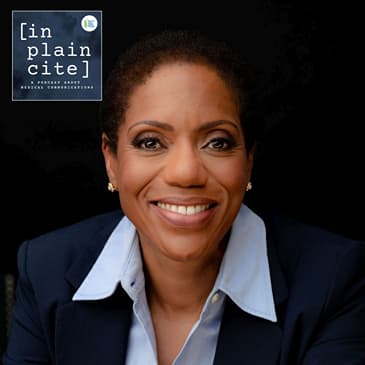
In this episode, Rob sits down with Sonya Snedecor, Chief Simplicity Officer at Science Clarity. They discuss why clearer scientific communication begins with understanding our purpose and our audience, and what organizations risk when valuable research is difficult to understand.
To join ISMPP, visit our website at https://www.ismpp.org/
[00:00:01] As medical publication professionals, we have a responsibility to be thorough. But when more information makes the science harder to understand or use, have we really communicated effectively? This is In Plain Cite, a podcast exploring the biggest questions and trends facing medical publication and communication professionals. I'm your host, Rob Mathias, President and CEO of ISMPP.
[00:00:24] Today, I'm joined by Sonia Snedekor, Chief Simplicity Officer at Science Clarity. Together, we'll explore why clear scientific communication begins with understanding our purpose and our audience, and what organizations risk when valuable research is difficult to understand. Let's get into it. You know, when I think about medical communications over time, we were trained that having more is better, having more stuff, more information, more text, more jargon was the way to go.
[00:00:53] And you and I are going to have a conversation today about making things simpler and kind of toning it down a bit. So why don't you talk to me about that? Full disclosure, I am not a medical publications professional. I am a researcher by training. But I also come from the school of thought that, yeah, of course, more is better. I totally get that. I started doing this, which is helping scientists communicate their research clearly, because I realized that I've worked with medical communications professionals.
[00:01:23] I've worked with them. There is wealth of help for researchers to communicate their work in publications and conferences. And then on the other side of the spectrum, there's also a dedicated industry helping scientists communicate to the public. But if I think about what I did in the 20 something years, I was a researcher. Never once did I talk to the public. And maybe 20% of my work was a publication or a presentation at a Congress or journal.
[00:01:51] 80% of it was talking to each other. And there is absolutely no help for doing that. So I borrow the strategies that writers and professional communicators and designers use instinctively. And I train scientists on them so that they can have influence and recognition and all the things that they want for their hard work. And the way that looks is often trying to convince people that what you're doing now is not great.
[00:02:21] And that's hard because so many other people are doing it, right? So many other people have these posters that are actually, you know, a third of a manuscript on a poster. And it's so ubiquitous. It's normal. So part of what I have to do is try to break people of those bad habits and then show them some strategies to do it better. Excellent. Excellent. So you had mentioned the posters themselves.
[00:02:44] Tell me more about that because we were trained, you know, early on that you had to put all the information, full disclosure, full transparency onto the posters. And are you saying that's different now? I've seen that there's an evolution in poster presentations. I know how hard it is. I've tried to make my own posters simple, but you get so, you know, married to the details. Of course they have to go in. Of course they have to go in. This is actually very difficult. But if we think, what is the point of the poster presentation?
[00:03:13] And if the point is to have someone interact while they're at the conference, well, then how can we do that the best way? And the best way is not to put a whole bunch of text that somebody has to read it standing up in very, very small print. So I try to talk about what is our objective and how do we meet that objective independent of what we may have known in the past. So I really like that perspective. I think you're talking about purpose and intentionality, right?
[00:03:42] Taking a step back and saying, okay, well, is it my job here to put the whole kitchen sink on the poster the way I got trained in graduate school? Or am I thinking about the end user and what they actually need to walk away with? And it may just be a couple of core messages. It's definitely an interesting perspective and one that we probably don't get get raised in in this profession, I will say. Not very much at all. No. So if I have open ears and I want to say, okay, well, tell me more about simplification, what would you tell me to do?
[00:04:08] What I mean by that is what I really mean is focus. I really mean focus on what is it that you want the audience to know. And I'm going to actually take it even a step back from there. When I give trainings to different teams, communicating internally, but it's all the common denominator is that it's usually complex research that's difficult to even make simple or make clear to people who are just as smart as you are.
[00:04:32] But I have different education. Being a mathematician, I like formulas. I like frameworks. So I give a couple of frameworks. One, I call the three A's, aim, audience and arguments. Now, the aim is the most important. And that is the thing that we never as a research scientist, it's the hardest thing that people do. I mean, they almost never do that. Never think about what is the one thing I want people to walk away from?
[00:04:57] What is the thing I'm trying to say? And the aim and audience are obviously connected. If you change one, you have to change the other. The argument is that's the one that actually scientists usually do best. Because the argument is what is the information necessary in order to achieve your aim for your audience? And that is the vehicle by which you focus, right? Because there's going to be some information that's necessary and some information that is not.
[00:05:25] But in doing so, there's also a lot of strategies that make it easier for your audience to understand. You as medical publications professionals do these a lot. You use informative headers. You use not blocks of text. You don't, you overwhelm people with visuals. There are all of those kinds of strategies that most rank and file scientists don't know. Those are the kinds of things I teach them about. So it's easier for the audience to understand.
[00:05:54] Yeah, it's a good point. I think most of our folks that work in this profession probably think that they have to present all of the arguments. And if I'm listening to what you're saying correctly, if you know your aim and you know your audience, it's possible that you might want to pick out the more salient arguments to meet the needs of that particular objective. Exactly. What is it that you need to meet your objective, which is not necessarily the entire collection of data that exists?
[00:06:18] Okay. So I'm going to think with my listeners hats on right now and they're thinking, well, wait a second. I don't know if I'm allowed to not present all the data like it's required. So, you know, if you were asked the question about being transparent and having full disclosure versus meeting your audience needs, how would you address that? That's a common thing because I used to work in consulting and you're working with consultants. That's exactly what they have to do. They did a study. They have to report everything.
[00:06:41] To the client. And the way, the way I talk about that is, you know, I tell people, okay, you have all your data, but there's gotta be the data. That's the star. Like I say, what's the, what's the Beyonce of your destiny's trial? You know, everything cannot be in front. So what is in front and then everything else kind of gets to the back either. It's not at the beginning or in an appendix, but somewhere else, there's gotta be a star of the show.
[00:07:07] Okay. Okay. Now do you apply the same methodology to peer reviewed scientific publications as you would do a poster hanging in a Congress hall? Because I think, you know, as we talk through this, a lot of our listeners will be thinking, well, the full record of the data set is probably going to be in the peer review publication. And maybe I can't mess with that quite as much, although I get some, you know, some ability to do that in the discussion section, perhaps, but the scientific poster or even the Congress presentation to some degree can be a little bit more of an art form is what I hear you saying.
[00:07:35] In terms of thinking about your audience and how to best present that data. So it's meaningful. One thing I have noticed is that, you know, every even company or organization has their own culture and how that group does it. I do find that scientists are innovative, but they're not always the risk takers. And so, however the norm is in that community, it's very difficult for scientists to go against that. I noticed.
[00:08:01] Yeah. Well, and I think there's also a difference between, you know, proper scientific communications and being a communication professional and thinking about your end audience, which is what I hear you talking about here during our discussion today is I don't want you to think about just the science. I want you to think about who you're actually speaking with and what their objectives are. So that's really important. Well, if I'm thinking just as someone who's read a bunch of clinical trials, I kind of do appreciate the standardization that clinical trials tend to be written in.
[00:08:29] But the purpose of a publication historically is really documentation of this work and theoretically reproducibility. And that's not necessarily the purpose of, say, talking to the cross-functional team. But I tend to, when I talk about what I talk about, I tend to think about this in the context of a scientist talking to another scientist outside of that very prescribed way in the publication space.
[00:08:57] Right. And that gets right back to you're talking about knowing your audience and who is actually going to be receiving the information and what they're going to do with it, which I think is really important. You know, when we think about doing medical communications and we don't think about the audience or we don't think about the aim or the arguments that we have, what are the potential costs that can happen? Yeah, this is how I also kind of got into it because I would have to give these presentations to clients. And if I didn't think about what do they need to know or how can they how do they consume this information?
[00:09:24] What can they understand? What happened was either they just nodded their head politely and then my study just sat on the shelf, which is the same thing. You can get it published and nobody ever reads it. So we basically wasted a whole lot of time for something that's not going to make an impact. Or what would happen that was even more annoying is that, you know, when people don't understand something, there's inherent there's research on this.
[00:09:50] There's kind of an inherent skepticism about it when it's confusing or not understandable. And that skepticism kind of comes out in, well, let me ask more questions. Maybe I want to ask for more work. Maybe I want to ask for, you know, someone else's opinion. And so it really does. First, it doesn't feel good on your credibility. And then two, it's just all again more wasted time redoing things that should already be clear or clarifying things that should already be clear.
[00:10:18] People are busy. People work really hard. Do this work once, right. And if we communicate it well, everyone knows it's finished. Everyone understands that everyone can use it for their purposes. So, you know, we're not, we can't really quantify, say, the amount of money lost. But I know that there is lost reputation, wasted time, wasted effort. All of those things happen when we don't communicate well. You know what?
[00:10:47] Even if you can't put a dollar sign on it, there's still patients that are waiting to have good healthcare decisions being made on their behalf. And so if those messages are not getting out there, if communication is not happening, it's potential that there are going to be patients that would suffer, which is also a pretty big cost when you think about it. That's right. I'm changing subjects a little bit and changing where we're heading and talking about jargon. Right. Right. So a lot of our folks now are, they were raised again to think about the big terms,
[00:11:15] the terminology, using jargon in our publications and our communications. And just want to get your sense as to how necessary you think that is moving forward, especially in an era where people are just too busy to pay attention. Yeah. So they're too busy to understand jargon and too busy to say it plainly because they don't want to think about it. So we're in a little bit of a catch-22, aren't we? I like jargon. I mean, jargon is there for a reason.
[00:11:37] It is there to help people of similar experience and who are in the same community communicate with themselves easily. The challenge is if you're not in that community. I try to, one of the other skills I work with scientists on is not only to have their aim, but to make that aim one sentence in plain English.
[00:12:01] And it is a lot harder than that sounds for most people because they're so used to talking in this scientific abstract kind of language. It's almost like a crutch. Like if I say these big words, then I'm kind of meaning something. But if you examine what the words are, they're saying something that's very, very vague. And that is not effective communication.
[00:12:28] So jargon is a way to kind of get around really thinking about what you want to say and saying it in a way that's very clear for a lot of people. That's definitely one of the things that people kind of should cut down on if they want people to understand their work easier. But what it does is it kind of shifts the burden of understanding from the listener on to the speaker,
[00:12:54] depending on whether that speaker wants to spend the time. They may or may not, but it's worth it in the end. I think that's a really, really important point in talking about where the burden of trying to get understanding comes from. A lot of times we'll just throw information out and hope that the burden of the end user, the audience is going to try to figure it out on their own. And what I hear you saying today is that it's really important for us as medical communication, medical publication professionals to think about the audience and do the digestion ahead of time,
[00:13:23] to think about those key points that we want them to walk away with and making that clear, even though jargon is so much easier. That's right. It would benefit medical publications professionals and everyone else as well. It's definitely a different way of thinking about things in the way we're traditionally brought up, especially if you come from a scientific background or a researcher who has come up and become a publication professional. It's just not the way that we're taught to think about things. It's a whole different world. Does AI play a role in this? I have to ask you the artificial intelligence question. So for me, I use AI every day.
[00:13:52] Most common way I use AI, and I'd encourage people to do this if they have access to it, this is what I'm saying. What is your understanding, chat GPT, of what I'm saying? So that one, AI is great at helping you make something more concise, which is always a good thing. And two, you can test what you're saying against this machine that we now have access to and test that machine's learning of what you're saying.
[00:14:20] So you can test whether your communication is effective before you have to try it on real people. And I find that very helpful. So I wouldn't have actually thought of that. I actually would have thought of what you said originally, which is, let me throw it into the machine and make it simpler. Yeah, yeah. I ask all the time, okay, so what is your understanding of this? And don't bring any information in, just read this paragraph and base it off of this. And sometimes I surprise myself. Right, right.
[00:14:50] Now, it's interesting to use the tool in that particular format. So very good, very good. So now I want to change the subject completely and talk about pickleball. So in the show notes, and I actually don't know what your perspective is, but we have notes on here that say that you can relate this whole thing to pickleball. So I'd like you to tell me about that. Yeah, so I wrote a newsletter some months ago. I learned to play pickleball starting last year. And I started with lessons. I don't come from a tennis background. A lot of people come from tennis and pickleball. I dumped. So I started taking lessons.
[00:15:18] And then I took some more lessons. And then I started playing with the recreation community. I totally understand why now it's fast-growing sport. It's fun. But what I learned is, I noticed that there are a lot of people doing things that I would expressly learn not to do in the lessons. Because so many people either are, you know, just naturally athletic or they taught themselves or they come from tennis and they haven't had the benefit of formal instruction.
[00:15:47] So there's a lot of bad habits. And it's the same in scientific communication. Because we don't know. You're just kind of thrown out there and say, hey, communicate your work. For those of us who aren't communications professionals, you know, we just kind of have to figure it out. And people have figured out a way to do it. But that doesn't necessarily mean it's the right way. And as an update to the pickleball, I started taking tennis lessons. So now I started taking tennis lessons.
[00:16:17] And the first class, I think it was about a month ago, he asked us, have we played tennis before? And there was this one guy who said, well, this is my first lesson, but I've been playing for 20 years. So he's definitely managed to hit it over the net and then hit it back when it comes back. But if you look at him, he's definitely not the kind of guy you want to emulate because he'd never, ever taken a lesson. And so a lot of it, that's why I say I have to teach people to get out of their bad habits because they figured out a way to do it.
[00:16:46] But it's not necessarily the easiest way, either for them or for the listener. Well, I can tell you as someone who has taken four pickleball lessons, there's plenty of bad habits. And they're hard to break. So I can understand where you're coming from when you talk about medical communications and bad habits because we've just been doing this way for so long. And it's about recognizing, I think, based on what you're saying, that the environment itself has changed and we have to do better. Well, I do appreciate your time here today.
[00:17:12] I wanted to ask you if there's one thing that you could tell our listeners today before we bring this to a close, any one takeaway message that they should know as they're thinking about their scientific publications. What would that be? Again, as a former researcher, the one thing that I think would be helpful for future researchers, and I know would have been helpful for me, is when we're writing these publications, again, nobody really thinks about what do I want to say? What do I want people to take away?
[00:17:41] And I've worked with medical writers as well. And, you know, they're not authors. And so they try to follow the lead of the authors and I get it. But if they can help the scientists who won't have the benefit of this podcast and really say, before we go any further, what is the one thing you want this audience to know from this publication? And force people to really think about that and make a decision amongst the authors, because I've been in that seat too.
[00:18:10] Everything else goes easier for everybody from there on. But that's not something that we're often forced to think about, but it would be really helpful. Yeah. Yeah. No, really good message. Don't just throw them in the kitchen sink. And Sonia, I hear you saying, start with the end in mind, which I think is a really, really important message for our people. So I appreciate that. That's all for today. Thank you all for listening. Please take a minute to subscribe to In Plain Sight on your favorite podcast app.
[00:18:38] Share with your colleagues and rate our show highly if you liked what you heard today. In Plain Cite is a production of ISMAP, the International Society for Medical Publication Professionals. Our production partner is Citizen Racecar. Our producer and editor is Hajar Eldas. Post-production by Alex Brower. Publication and promotion by Candice Chantalou. To join ISMAP today, go to ismap.org. Becoming a member means you can participate in value-packed webinars and receive instant access to exclusive tools and resources.
[00:19:07] If you're interested, just go to ismap.org. That's ISMPP.org to learn more.